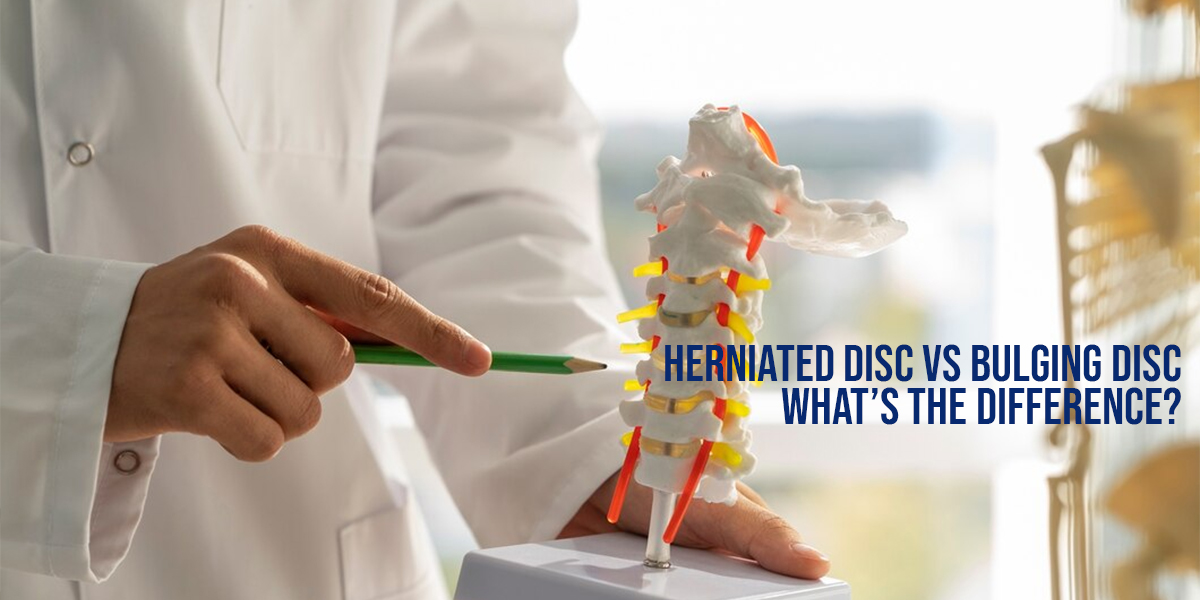
Herniated Disc vs. Bulging Disc: What’s the Difference?
Back pain can feel scary. One day, running feels fun. The next day, bending feels weird. Sitting hurts. Standing hurts. Parents start using big words. Doctors use even bigger ones. Herniated Disc. Bulging disc. Sounds confusing, right? Here is the simple answer. Both problems involve tiny cushions inside the spine. A bulging disc means the cushion pushes out a little.
A herniated disc means the soft middle part pushes out through a small crack.
Think about a jelly donut. One donut gets squished and puffs out. Nothing breaks.
Another donut gets a tear, and jelly comes out. Both donuts change shape. One leaks.
Let’s make this easy to understand.
What Is the Spine?
The spine is like a tall stack of blocks. These blocks are called bones. Between the bones sit soft cushions. These cushions are discs. Discs act like shock absorbers. They help the body move. They help the body bend. They keep bones from rubbing together.
Without discs, moving would hurt all the time.
What Is a Disc Made Of
Each disc has two parts. A strong outer ring, a soft, squishy middle. The outer ring works like a tough shell. The middle works like jelly. Healthy discs stay smooth and round.
What Is a Bulging Disc
A Bulging Disc happens when the disc pushes outward. The outer ring stays closed.
Picture pressing down on a balloon. The balloon changes shape. Air stays inside.
Nothing breaks. Bulging discs often grow slowly. They can happen over time. Sitting too long can play a role. Poor posture can play a role. Heavy lifting can play a role.
Here is something surprising. A bulging disc does not always hurt. Some people have one and feel perfectly fine. Pain begins when nearby nerves feel pressure.
What Is A Herniated Disc
A Herniated Disc happens when the soft middle pushes through a small tear. Think about squeezing a jelly donut too hard. Jelly pushes out. The disc shell develops a tiny crack. The inside moves through the opening. This type of disc problem often hurts more. Nerves can become irritated quickly. Pain may feel sharp. Sudden. Strong.
The Biggest Difference
| Feature | Bulging Disc | Herniated Disc |
| Movement | Disc pushes outward | Disc develops a tear |
| Integrity | Outer ring stays closed | Soft middle escapes |
| Onset | Often slow changes | Often sudden changes |
| Pain Level | May not hurt | More likely to hurt |
Why Do Discs Change Shape
Discs work hard every day. Jumping, Running, Sitting, Lifting. Over time, discs lose some strength. They lose some water. They become less flexible. Small stresses add up. Bad posture adds pressure. Long sitting adds pressure. Sudden twisting adds pressure. Eventually, discs react. Some bulge. Some tear.
Typical Sensations of a Bulging Disc
A bulging disc usually causes mild discomfort. The pain often feels dull and achy rather than sharp. The back may feel stiff, and movements can feel tight or restricted. The discomfort may not stay constant. It can come and go during the day. Some people also notice a light tingling feeling. In many cases, gentle movement helps. Stretching can ease the tightness. Even changing positions, like standing after sitting, may bring relief.
Common Symptoms of a Herniated Disc
A herniated disc often creates stronger symptoms. The pain tends to feel sharp and intense. Some people describe it as an electric zap. The discomfort may shoot down the arms or legs, depending on where the disc problem sits in the spine. A burning sensation may appear, along with numb spots. Muscles may feel weak or tired. The pain often travels away from the back, making it feel like the problem is somewhere else in the body.
Why Pain Travels Down The Body
Nerves connect the spine to the rest of the body. When a disc presses on a nerve, pain follows the nerve path. A lower back problem may cause leg pain. A neck problem may cause arm pain. The brain receives signals from irritated nerves. Pain feels like it moves.
How Doctors Find the Problem
Doctors start with simple checks. They ask questions. They test movement. They check strength. Sometimes imaging helps. An MRI can show disc shape. It can show bulges. It can show tears. Pictures help confirm the cause.
Can Disc Problems Improve
Yes. Very often. The body has amazing healing power. A bulging disc may settle down.
A herniated disc may shrink. Pain can be reduced. Movement can improve.
Healing depends on proper care.
Effective Care Strategies for a Bulging Disc
Care typically focuses on reducing pressure on the spine and improving overall movement. When the spine moves better, discomfort often begins to settle. Gentle spinal adjustments can help restore proper motion. Posture training plays an important role in reducing unnecessary strain. Stretching exercises help loosen tight muscles, while strength building supports the spine and improves stability. Together, these steps encourage healthier movement patterns, which can support recovery and long-term comfort.
Supportive Treatment Approaches for a Herniated Disc
Care usually centers on calming irritated nerves and easing pressure around the affected disc. Reducing nerve irritation often leads to noticeable pain relief. Gentle spinal care can help improve joint mechanics and decrease stress on sensitive tissues. Decompression therapy may help create space within the spine, which can reduce pressure on the disc and nearby nerves. Targeted exercises help stabilize the area and support healing. These approaches work together to promote gradual improvement and better function.
Healthy habits include:
- Taking breaks from sitting
- Stretching regularly
- Playing actively
- Lifting carefully
- Small actions protect discs.
Real Life Example
Imagine two kids. Kid one sits hunched during homework. Back feels stiff. The doctor finds a Bulging disc. Posture and movement bring relief. Kid two lifts something heavy the wrong way. Sharp pain appears. The doctor finds a Herniated disc. Gentle care and exercises help healing. Different causes. Different feelings. Different recovery paths.
When Should Someone Tell A Doctor
Pain signals deserve attention.
Warning signs include:
- Pain lasts a long time
- Pain travels into the arms or legs
- Numbness appears
- Muscles feel weak
- Early care helps with faster recovery.
Frequently Asked Questions
1. Can kids have disc problems?
Yes. Disc problems can occur in children, though less frequently than in adults. Poor posture, heavy backpacks, sports strain, or injuries may contribute. Growing bodies still face spinal stress. Early evaluation helps identify issues, reduce discomfort, and prevent small problems from becoming long term concerns.
2. Does a bulging disc always hurt?
No. A bulging disc does not always produce pain. Some people have bulging discs without noticeable symptoms. Discomfort typically appears when nearby nerves experience pressure or irritation. Pain levels vary widely. Proper assessment helps determine whether the disc is actually causing the symptoms.
3. Is a herniated disc dangerous?
Not always. Most herniated discs improve with conservative care and time. However, certain symptoms require prompt medical attention. Severe weakness, loss of sensation, or changes in bladder or bowel control may signal serious nerve involvement. Professional evaluation helps guide safe and effective treatment decisions.
4. Can movement help disc pain?
Yes. Gentle movement often supports spinal health and recovery. Controlled activity improves circulation, reduces stiffness, and helps maintain flexibility. Complete rest may increase tightness and prolong discomfort. Appropriate exercises tailored to the condition can promote healing while protecting sensitive spinal structures.
5. Can chiropractic care help disc issues?
Yes. Chiropractic care may help manage disc-related discomfort by improving spinal mechanics and reducing pressure. Gentle adjustments, mobility work, and corrective exercises often support recovery. Treatment plans vary based on individual findings. A professional evaluation ensures care matches the specific disc condition.
Start Helping the Spine Feel Better
Back pain does not need to control daily life. Clear answers make things less scary. Proper care makes recovery possible. Pacific Chiropractic & Wellness Center offers gentle spinal evaluations. Personalized care plans. Support for healthier movement.
Schedule a visit today. Help the spine move freely. Help the body feel strong again.