
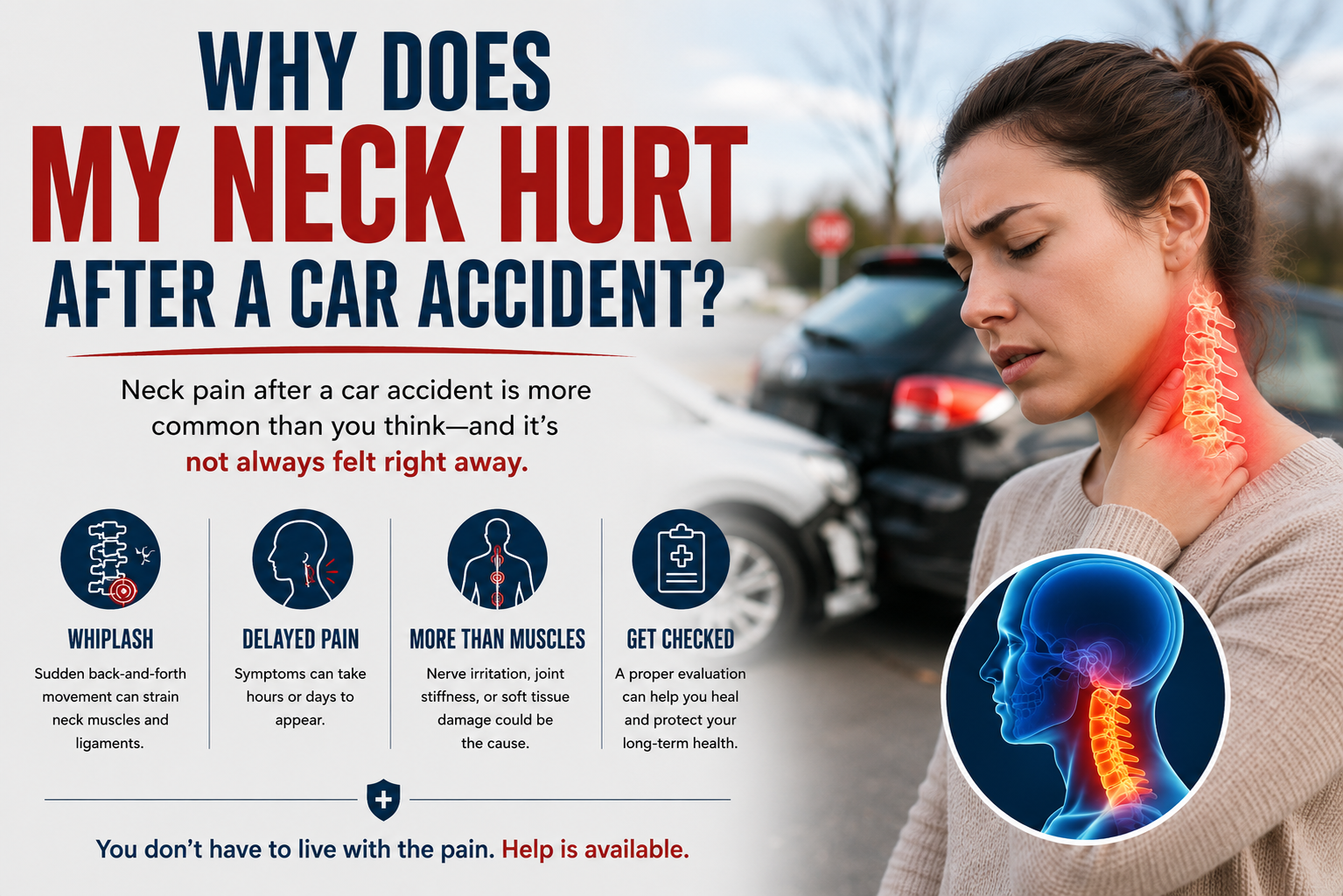
Why Does My Neck Hurt After a Car Accident?
Neck pain after a car accident is one of the most common injuries people have after a crash. Even a small accident can put a lot of force on the neck. During a collision, the muscles, ligaments, joints, and discs in the neck can stretch or become injured.
Some people feel pain right away, while others feel fine at first and notice symptoms later. Learning why neck pain happens after a car accident can help people understand their injury and know when to get medical care.
How a Car Accident Can Hurt the Neck
The neck, also called the cervical spine, supports the weight of the head and helps it move in different directions. It is made up of bones, muscles, ligaments, joints, discs, and nerves that all work together.
During a crash, the body may stop suddenly because of the seat belt. The head, however, may keep moving forward, backward, or from side to side. This fast movement puts extra stress on the neck. Even if the crash happens at a low speed, the force can still injure the soft tissues and joints.
A neck injury after a crash can happen in many types of accidents, such as:
- Rear-end collisions
- Side-impact crashes
- Head-on collisions
- Multi-vehicle accidents
- Sudden stops
- Hit-and-run accidents
The amount of damage to the car does not always show how serious the injury is. A person can have severe neck pain even after a minor accident.
Common Causes of Neck Pain after a Crash
One of the most common causes of whiplash neck pain is the quick back-and-forth movement of the head during a collision. This sudden motion stretches the muscles, tendons, and ligaments farther than they should go. The injured tissues become sore and swollen, making it hard to move the neck.
Common signs of whiplash include:
- Neck pain
- Neck stiffness
- Headaches
- Shoulder pain
- Upper back pain
- Dizziness
- Trouble turning the head
Cervical Strain
Another common injury is a cervical strain. This happens when the muscles or ligaments in the neck are stretched or slightly torn. A cervical strain may cause pain during movement and make simple daily tasks more difficult.
Symptoms of a cervical strain may include:
- Soreness
- Muscle spasms
- Tenderness
- Pain when moving the neck
- Reduced range of motion
Some people may also injure the small joints in the neck or the discs between the bones of the spine. If these injuries put pressure on nearby nerves, pain may spread into the shoulders, arms, or hands. Tingling, numbness, or weakness can also develop.
Why Pain May Start Later?
Many people are surprised when they wake up with a sore neck after an accident instead of feeling pain right after the crash.
This happens because the body goes into “survival mode” after a sudden event. It releases natural chemicals, such as adrenaline and endorphins that can hide pain for a short time. As these chemicals wear off, the injured tissues begin to swell. This swelling can make pain and stiffness easier to notice.
It is common to develop neck stiffness after a collision within the first 24 to 72 hours.
Delayed symptoms may include:
- Trouble turning the head
- Neck stiffness
- Headaches
- Muscle tightness
- Soreness that gets worse over time
Feeling pain later does not mean the injury is minor. Delayed symptoms are common after many car accidents.
When to Get Medical Care
Any neck pain that continues after a car accident should be checked by a healthcare professional. Early care can help find the cause of the injury and lower the chance of long-term problems.
Medical care is especially important if symptoms include:
- Numbness or tingling in the arms
- Weakness in the hands or arms
- Severe headaches
- Loss of balance
- Pain that keeps getting worse
- Trouble moving the neck
Getting evaluated early can help identify injuries that may not be obvious right after the accident.
References
- Mayo Clinic – Neck Pain: Symptoms and Causes
- Cleveland Clinic – Whiplash
- National Institutes of Health (NIH)
- American Academy of Orthopaedic Surgeons (AAOS), where applicable
Disclaimer: This article is for educational purposes only and is not a substitute for professional medical advice, diagnosis, or treatment. Anyone who has ongoing or severe symptoms after a car accident should seek care from a qualified healthcare professional.