
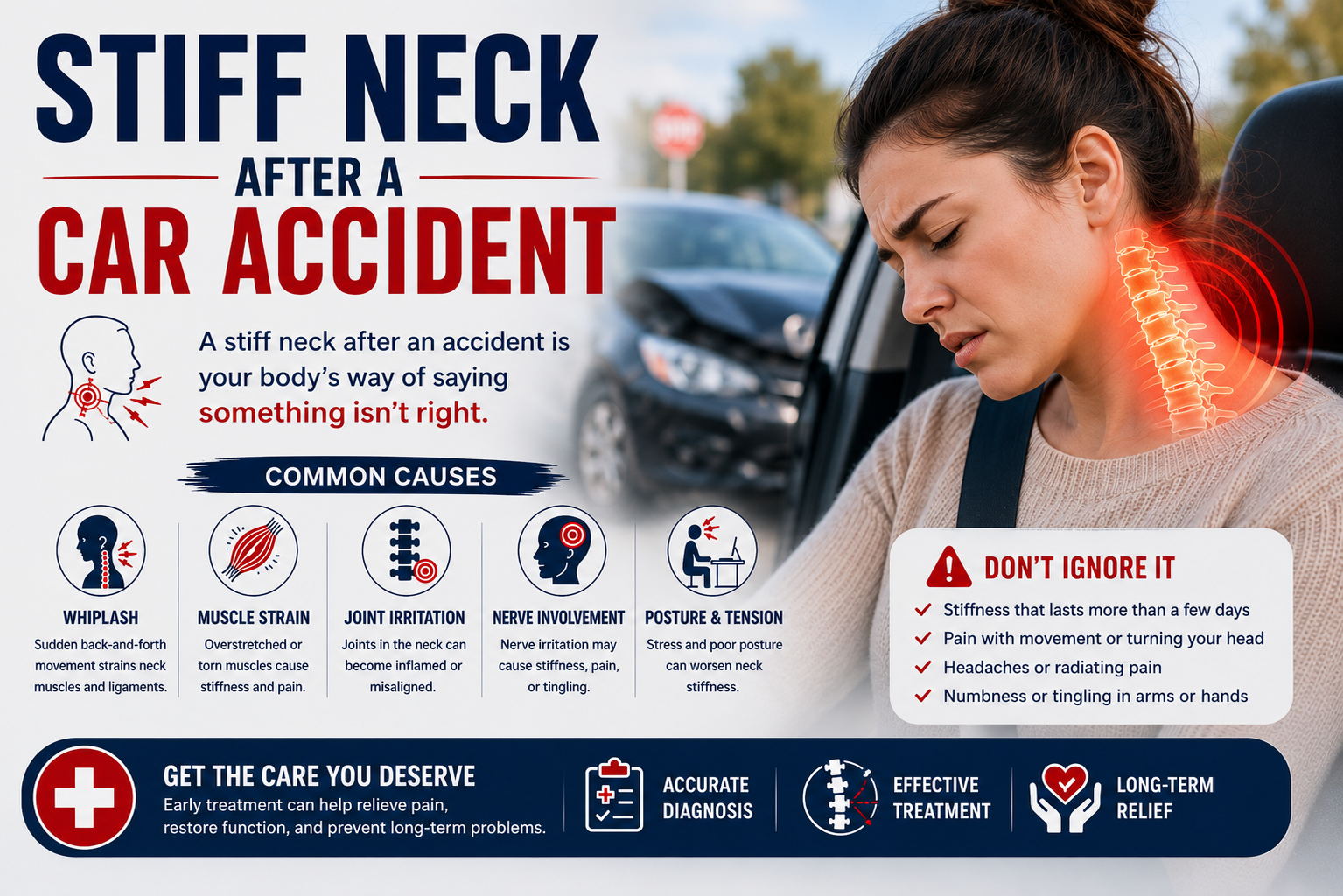
Stiff Neck after a Car Accident
A stiff neck after a car accident is a common problem after both major and minor crashes. The neck is made to support the head and help it move in many directions. During a collision, that normal movement can happen too fast.
The muscles, ligaments, joints, and other soft tissues can become stretched or irritated. As a result, turning the head may become painful or difficult. Some people notice symptoms right away, while others wake up the next day with stiffness.
Knowing what causes a stiff neck after a crash can help people understand the injury and know when medical care may be needed.
Why the Neck Feels Stiff After a Crash?
The neck absorbs a lot of force during a car accident. Even if the seat belt protects the body, the head may still move quickly forward and backward or from side to side. This sudden motion can strain the tissues that support the neck.
Several injuries can lead to neck stiffness after a crash, including:
- Overstretched muscles
- Sprained ligaments
- Inflamed neck joints
- Mild disc injuries
- Irritated nerves
These injuries can make everyday movements, such as driving, working, or looking over the shoulder, much harder.
Common Signs That May Appear
A stiff neck is often only one part of the injury. As swelling develops, other symptoms may also appear.
Common whiplash symptoms include:
- Neck pain
- Headaches
- Shoulder pain
- Upper back soreness
- Trouble turning the head
- Dizziness
- Feeling tired
Many people also notice tight neck muscles, especially after sleeping or sitting for a long time. The muscles may feel sore or tense because they are trying to protect the injured area.
Loss of Neck Movement
As the injured tissues become swollen, moving the neck may become more difficult. This is known as reduced neck mobility.
A person may find it hard to:
- Look over one shoulder while driving
- Turn the head from side to side
- Look up or down comfortably
- Perform normal daily activities without pain
Loss of movement is common after a neck injury, but it should slowly improve as healing takes place. If movement continues to get worse, medical evaluation is important.
Why Symptoms Can Start Hours Later
Many people leave the accident scene feeling only a little sore. This happens because the body releases natural chemicals, such as adrenaline, during a stressful event. These chemicals can temporarily reduce pain.
As the body begins to heal, inflammation develops around the injured tissues. This is why many people wake up with a stiff neck the next morning or notice increasing pain over the next two or three days.
Delayed symptoms are common after car accidents and do not always mean the injury is minor.
Signs That Need Medical Attention
Most mild neck injuries improve with proper care, but some symptoms should never be ignored.
Seek medical evaluation if there is:
- Pain that continues to get worse
- Numbness or tingling in the arms
- Weakness in the hands or arms
- Severe headaches
- Trouble with balance
- Neck pain that does not improve after several days
Early evaluation can help identify the cause of the injury and reduce the risk of long-term problems.
Don’t Ignore Neck Stiffness after a Car Accident
Even mild stiffness can be a sign of an injury that needs attention. If whiplash symptoms, tight neck muscles, or reduced neck mobility continue after a collision, a prompt evaluation may help prevent the problem from becoming worse.
Pacific Chiropractic & Wellness Center provides comprehensive evaluations for auto accident injuries and creates personalized treatment plans to support recovery. If neck pain or stiffness continues after a crash, scheduling an appointment is an important next step.
References
- Mayo Clinic – Neck Pain: Symptoms and Causes
- Cleveland Clinic – Whiplash
- National Institutes of Health (NIH)
Disclaimer: This article is for educational purposes only and should not replace professional medical advice, diagnosis, or treatment. Anyone with persistent neck pain or stiffness after a car accident should seek evaluation from a qualified healthcare provider.